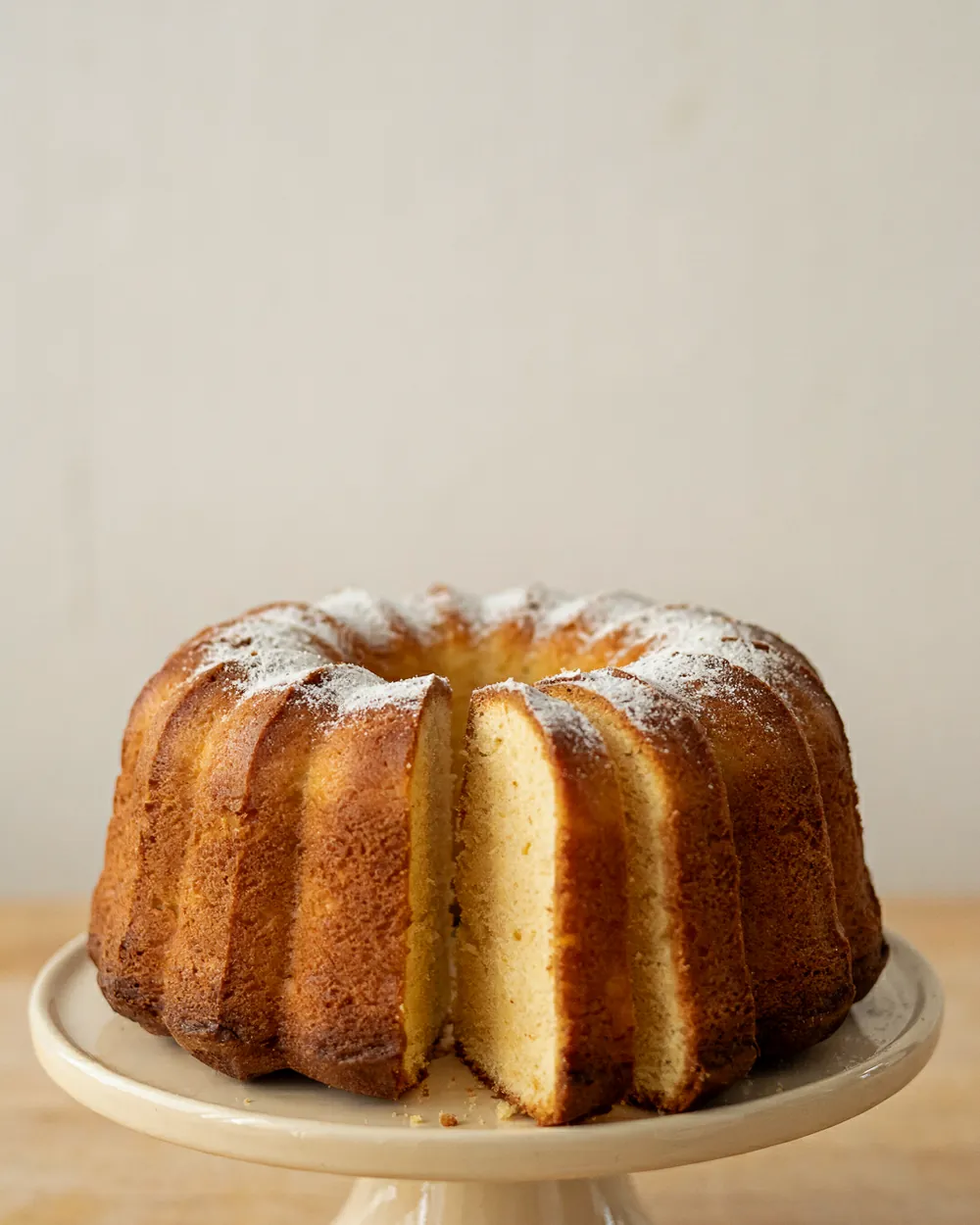
The short version: This is the classic Southern ratio: 3 sticks butter, one 8-ounce block of cream cheese, 3 cups sugar, 6 eggs and 3 cups flour, with vanilla and a little salt. There’s no baking powder. Bake it in a greased and floured 12-cup bundt pan at 325°F for 80–90 minutes, until a skewer comes out clean. The secret is the start: soft ingredients, then 5 full minutes of creaming, because the air you beat in is the only thing that lifts the cake.
Why this recipe works
Old-fashioned pound cake took its name from its recipe: a pound each of butter, sugar, eggs and flour. It’s rich and simple, but it can bake up a little dry and coarse. Southern bakers found a fix long ago. Swap some of the richness over to a block of cream cheese, and the cake changes in three ways you can taste.
- A finer, tighter crumb. A slice looks velvety and close-grained instead of open and cakey.
- More moisture. The cake stays soft for days, which is why it shows up at bake sales, church suppers and holiday tables.
- A gentle tang. Cream cheese balances all that sugar so the cake tastes buttery, not flat.
The numbers here are the ones most classic versions share: 1½ cups butter, 8 ounces cream cheese, 3 cups each of sugar and flour, and 6 eggs. Taste of Home and Food Network use that same core ratio, and America’s Test Kitchen’s version sits right beside it. Most of these recipes skip baking powder entirely, which is what keeps the crumb dense and even. The cake rises from air creamed into the butter and from the eggs, so the method matters as much as the list.
The ingredients (and what each one does)
| Ingredient | What it does |
|---|---|
| Unsalted butter, 1½ cups (340 g) | Flavor, plus the tiny air pockets that make the cake rise. Soft enough to dent easily with a finger, but not shiny or melting. |
| Full-fat block cream cheese, 8 oz (227 g) | Moisture, tang and that fine, tight crumb. Use the foil-wrapped brick. America’s Test Kitchen found that whipped cream cheese turns grainy and wet when baked, so the block is the safe choice. |
| Granulated sugar, 3 cups (594 g) | Sweetness and the crisp, golden crust. Its sharp crystals also cut air into the butter as you cream. |
| Large eggs, 6 | Structure and extra lift. Room-temperature eggs blend into the batter instead of chilling and stiffening it. |
| All-purpose flour, 3 cups (360 g) | Holds the whole cake together. Spoon it into the cup and level it; scooping straight from the bag packs in extra and dries the cake. |
| Vanilla and salt | Two teaspoons of vanilla round out the butter. Half a teaspoon of salt keeps a very sweet cake from tasting flat. |
A kitchen scale makes this cake easier: 360 g flour and 594 g sugar are the two numbers that matter most. For an even softer slice, use 3 cups (360 g) cake flour instead of all-purpose, as America’s Test Kitchen and Ina Garten do.
3 rules for a tall, moist pound cake
- Start with everything soft. Take the butter, cream cheese and eggs out 1 to 2 hours ahead. Cold cream cheese leaves little lumps, and cold eggs can firm up the creamed butter so the batter looks broken. Forgot the eggs? Set them in a bowl of warm tap water for 10 minutes.
- Cream for a full 5 minutes. Set a timer. The butter, cream cheese and sugar should turn very pale and fluffy, almost like frosting. With no baking powder, this is where the rise comes from, and short creaming is a common reason for a heavy, squat cake.
- Go gentle once the flour is in. Mix the flour on the lowest speed and stop while a few streaks remain, then finish with a spatula. Beating hard at this stage toughens the crumb and can leave tunnels inside.
Step by step
1Heat the oven and prepare the pan
Heat the oven to 325°F with a rack in the center. Brush every ridge of a 12-cup bundt pan with soft butter, dust it with flour and tap out the extra. Baking spray that contains flour works too. A 10-inch tube pan is fine as well.
Pound cake is heavy and sugary; any spot you miss is where it will stick and tear.
2Cream the butter, cream cheese and sugar
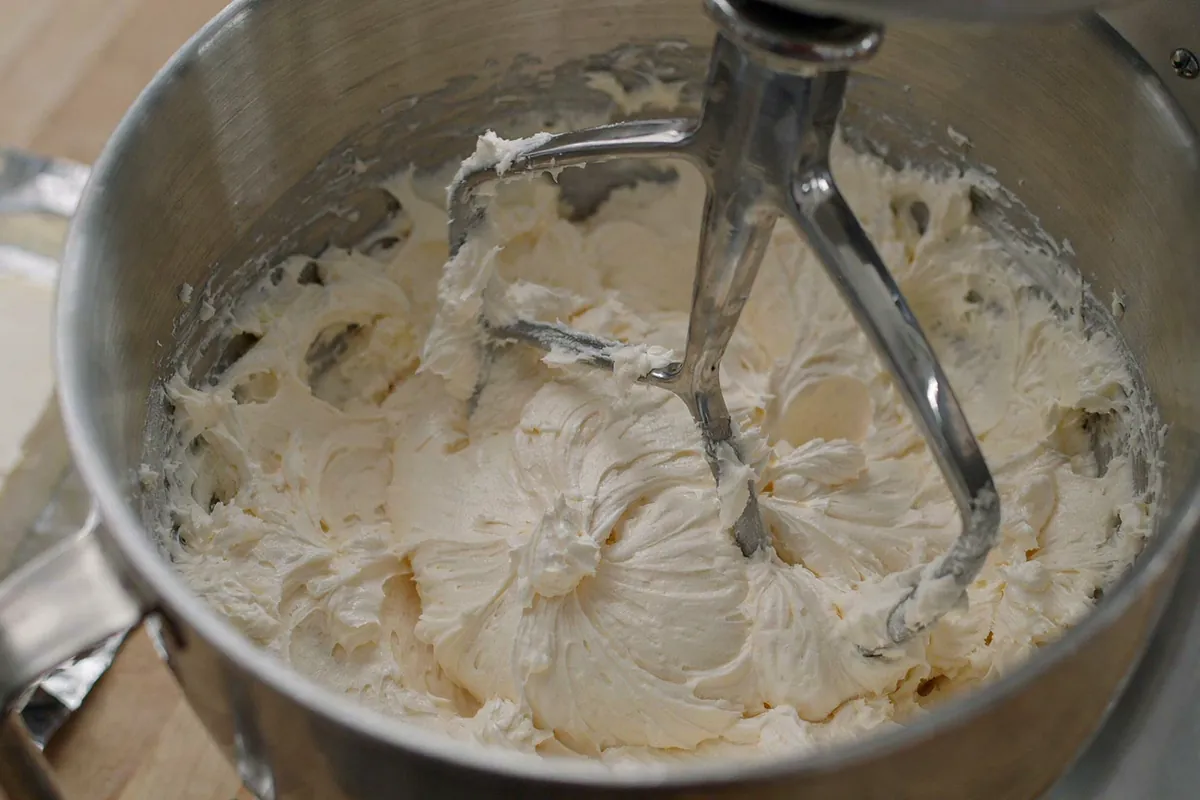
In a large bowl, beat the butter and cream cheese on medium speed for about 1 minute, until completely smooth with no white flecks. Add the sugar and beat on medium-high for 5 minutes, stopping twice to scrape the bottom of the bowl.
It’s ready when it looks very pale, almost white, and fluffy. A hand mixer works; give it an extra minute or two and move it around the bowl.
3Add the eggs one at a time
Add the eggs one at a time, beating on medium just until each one disappears before adding the next. Scrape the bowl, then beat in the vanilla.
If the batter looks slightly curdled at this point, keep going. It smooths out once the flour goes in.
4Add the flour in three parts
Whisk the flour and salt together in a separate bowl. With the mixer on the lowest speed, add it in three additions, mixing only until each one is mostly blended in.
Stop the mixer while a few dry streaks still show, then fold the batter a few times with a spatula, scraping up from the bottom of the bowl. The batter will be thick and creamy, a little like soft frosting.
5Fill the pan and bake low and slow
Spoon the batter into the pan, smooth the top and tap the pan firmly on the counter 2 or 3 times to knock out large air bubbles. A 12-cup pan will be about two-thirds full.
Bake for 80–90 minutes. Start checking at 75 minutes, since ovens vary. If the top browns quickly before the center is done, lay a sheet of foil loosely over the pan.
6Cool 15 minutes, then turn it out
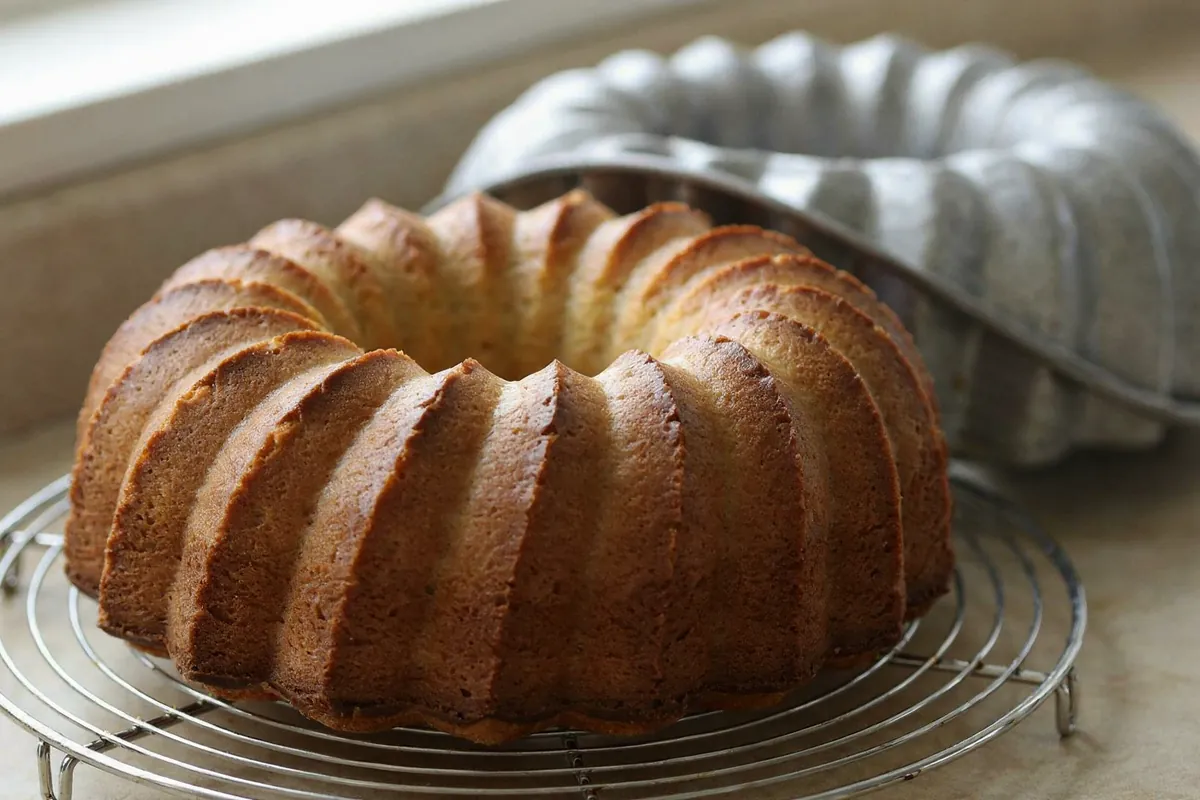
Set the pan on a wire rack and let the cake rest for 15 minutes. Run a thin spatula around the center tube, put the rack on top, flip and lift the pan off.
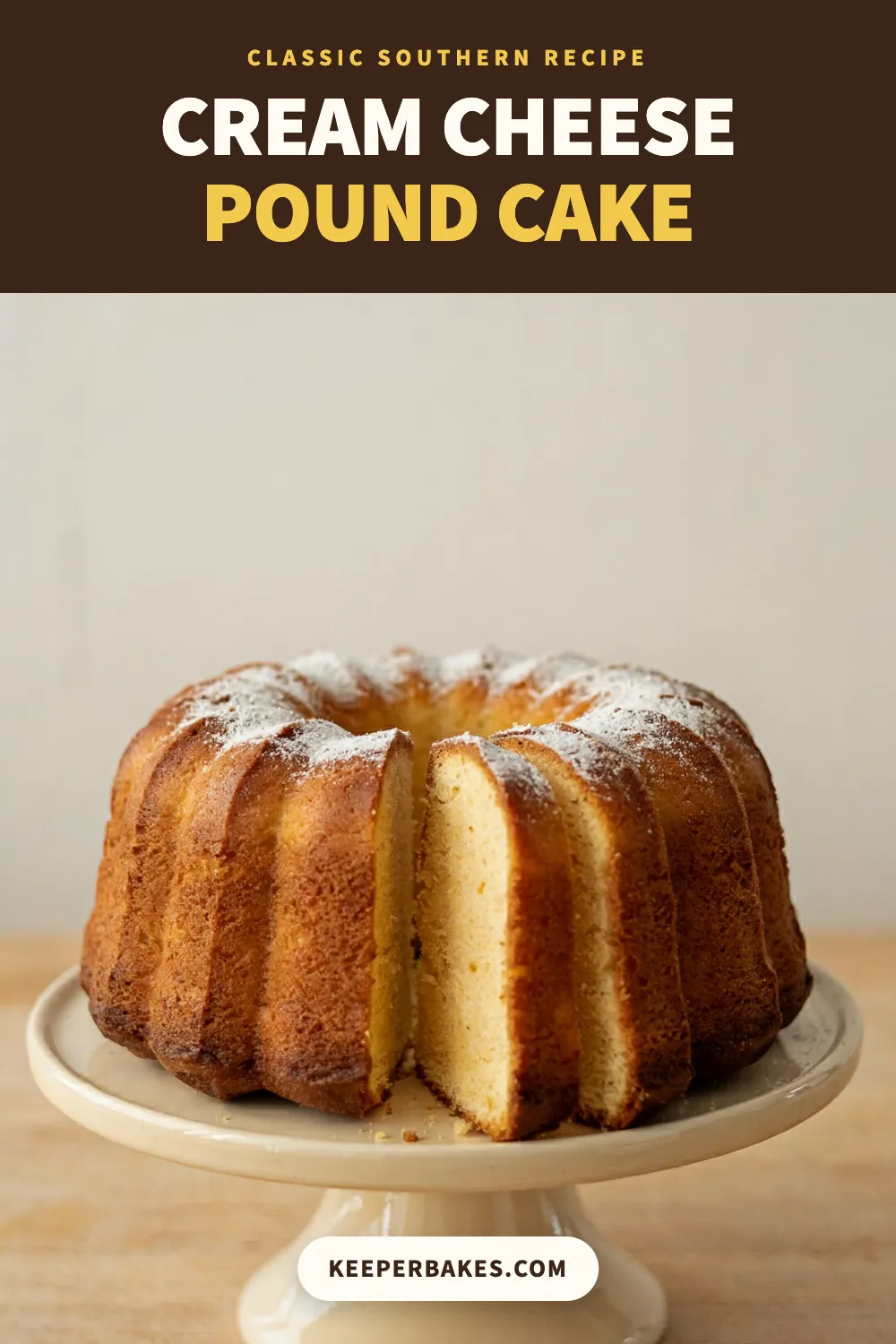
Let the cake cool completely, about 2 hours, before slicing. A warm pound cake slices into a gummy, squashed crumb; a cool one cuts clean. Dust it with a spoonful of powdered sugar if you like.
How to know it’s done
- Skewer: push a long wooden skewer or cake tester deep into the thickest part of the cake. It should come out clean or with a few dry crumbs. Wet batter means more time; check again every 5 minutes.
- Look: the top is a deep golden brown, and the cake is just starting to pull away from the sides of the pan.
- Touch: press the top gently near the center. It should spring back instead of leaving a dent.
- Crack: a split along the top is normal for pound cake. Check that the inside of the crack looks dry and set, not glossy.
Trust these signs over the clock. An oven thermometer is the easiest way to know your 325°F really is 325°F, and a few degrees off can add up over 80 minutes.
Classic Cream Cheese Pound Cake
A dense, moist Southern bundt pound cake with a block of cream cheese, a golden crust and no baking powder. Makes one 12-cup bundt cake, about 16 slices.
Pan: 12-cup bundt pan (or 10-inch tube pan), greased and floured
Ingredients
Instructions
- Heat the oven to 325°F with a rack in the center. Grease every ridge of a 12-cup bundt pan with soft butter and dust with flour (or use baking spray with flour).
- Beat the butter and cream cheese on medium about 1 minute, until smooth. Add the sugar and beat on medium-high for 5 minutes, scraping the bowl twice, until very pale and fluffy.
- Add the eggs one at a time, beating just until each disappears. Beat in the vanilla.
- Whisk the flour and salt together. On the lowest speed, add them in three additions and stop while a few streaks remain. Finish folding with a spatula.
- Spoon the batter into the pan, smooth the top and tap the pan on the counter 2 or 3 times.
- Bake 80–90 minutes, until a skewer in the thickest part comes out clean or with a few dry crumbs. Start checking at 75 minutes; tent loosely with foil if the top browns too fast.
- Cool in the pan on a rack for 15 minutes, then turn out onto the rack. Cool completely, about 2 hours, before slicing. Dust with powdered sugar if you like.
For a softer crumb, use 3 cups (360 g) cake flour instead of all-purpose.
Store wrapped at room temperature up to 3 days, or freeze wrapped slices up to 3 months.
Loaf pans: divide between two greased and floured loaf pans and bake at 325°F for 60–70 minutes, checking at 55.
Variations
Lemon cream cheese pound cake
Rub the finely grated zest of 2 lemons (about 2 tablespoons) into the sugar before creaming, and beat in ¼ cup fresh lemon juice after the vanilla. For a glaze, whisk 1½ cups (170 g) powdered sugar with about 2 tablespoons lemon juice, adding a splash of milk if it’s too thick, and spoon it over the completely cooled cake.
Vanilla bean
Scrape the seeds from 1 vanilla bean into the butter along with the extract. You’ll see tiny dark specks through the crumb and taste a deeper vanilla.
Two loaf pans instead of a bundt
Divide the batter between two greased and floured loaf pans (9×5 or 8½×4½ inches). Bake at 325°F and start checking at 55 minutes; most loaves need 60–70 minutes. Go by the skewer, not the clock.
Troubleshooting
| Problem | Likely cause | Fix next time |
|---|---|---|
| Dense, heavy streak at the bottom | Under-creamed, or cold eggs | Cream a full 5 minutes; use room-temperature eggs |
| Sank in the middle | Underbaked | Bake until a skewer comes out clean, not by the clock |
| Stuck to the pan | Missed spots, or cooled too long in the pan | Grease and flour every ridge; turn it out after 15 minutes |
| Dry, crumbly slices | Flour scooped, or overbaked | Spoon and level the flour (or weigh 360 g); check at 75 minutes |
| Tunnels or a tough crumb | Overmixed after the flour | Lowest speed, stop early and finish by hand |
| Small white specks in the cake | Cream cheese too cold | Soften it fully and beat it smooth with the butter first |
| Top dark before the middle is done | Oven running hot | Check with an oven thermometer; tent loosely with foil |
Storing and freezing
Once the cake is completely cool, wrap it tightly in plastic wrap or keep it in an airtight container or under a cake dome. It stays moist at room temperature for up to 3 days.
To freeze, wrap the whole cake or individual slices in plastic wrap, then in foil or a freezer bag, and freeze up to 3 months. Thaw at room temperature, still wrapped, so the moisture goes back into the cake instead of onto the surface. Slices thaw in about an hour.
Serve it plain, with berries and whipped cream, or toasted in a skillet with a little butter. More cakes live in Bundt and pound cakes.
Questions
Can I use low-fat cream cheese?
Stick with full-fat block cream cheese. Every classic version this recipe is built on uses the regular block, and reduced-fat cream cheese contains more water, so the cake may not bake up with the same texture.
Why is there no baking powder?
Classic pound cake rises from air beaten into the butter and sugar and from the eggs. Leaving out baking powder is what gives the dense, fine, even crumb this cake is known for. Some versions, like Taste of Home’s, add ½ teaspoon for a slightly lighter cake.
Can I halve the recipe?
Yes. Use 3 eggs and half of everything else, and bake it in one 9×5 or 8½×4½-inch loaf pan at 325°F. Start checking at 55 minutes; it usually needs 60–70.
Can I use a 10-cup bundt pan?
Yes, Food Network’s version of this ratio uses one, but the pan will be quite full. Make sure it holds at least 10 cups (fill it with water to check), and set a baking sheet on the rack below in case of drips.
Why did my pound cake crack on top?
That’s normal for a dense batter: the outside sets first, then the center keeps rising and pushes through the crust. On a bundt, it ends up on the bottom once you turn the cake out.