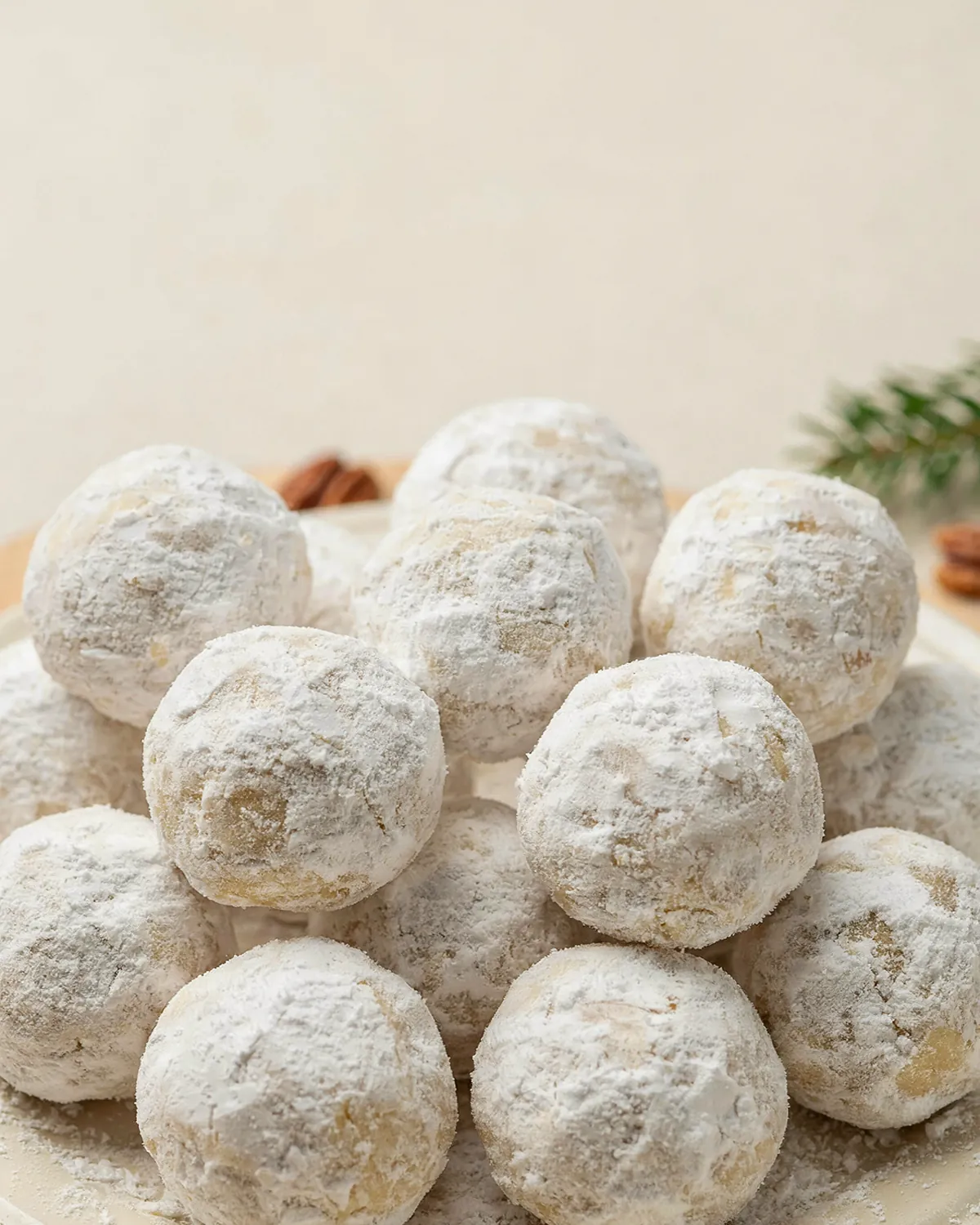
The short version: Snowball cookies are a simple shortbread dough: 1 cup butter, ½ cup powdered sugar, 2¼ cups flour and ¾ cup finely chopped pecans, with vanilla and a little salt. No eggs, no baking powder. Chill the dough for 30 minutes, roll 1-inch balls and bake at 350°F for 11–13 minutes, just until the bottoms turn lightly golden. The secret to a thick white coat that doesn’t crack the cookie: let them rest 5 minutes, roll them while warm, then roll them again once cool.
Why this recipe works
Snowball cookies go by a lot of names. Russian tea cakes, Mexican wedding cookies, pecan meltaways, butter balls: they’re all close cousins of the same idea, a rich, sandy, barely sweet shortbread with nuts, buried in powdered sugar. The formula has hardly changed in decades because it doesn’t need to. Most classic versions land on the same numbers used here: two sticks of butter, half a cup of powdered sugar, two and a quarter cups of flour and about three-quarters of a cup of nuts.
That ratio is why the cookies melt instead of crunch. There’s a lot of butter for the amount of flour and no eggs at all, so there’s very little to hold the crumb tightly together. The dough tastes almost like pecan shortbread, and the outer coat of sugar supplies most of the sweetness you notice on the first bite.
The same tender crumb is also the reason snowballs break. A hot cookie is soft and fragile, and a fully cold one won’t hold a thick layer of sugar. This version deals with both problems: a short chill so the balls keep their round shape, a gentle bake so they stay pale and soft inside, and two separate rolls in sugar at the right moments.
The ingredients (and what each one does)
| Ingredient | What it does |
|---|---|
| Unsalted butter, 1 cup (227 g) | Almost all of the flavor and the melt-in-your-mouth texture. Softened, but still cool: it should dent when pressed and not look shiny or greasy. |
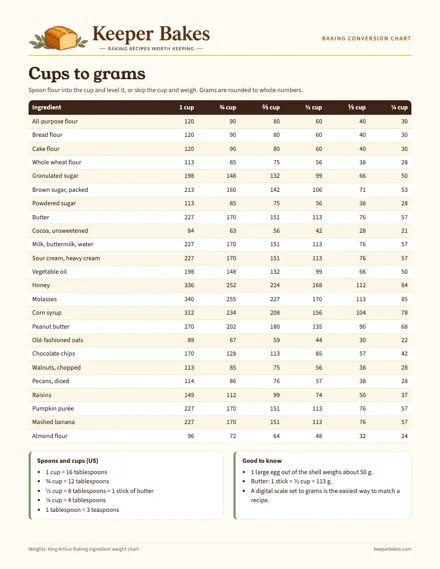
| Powdered sugar, ½ cup (57 g) in the dough | Sweetens lightly and dissolves easily into the butter, which keeps the crumb fine and tender. |
| All-purpose flour, 2¼ cups (270 g) | The structure. Spoon it into the cup and level it: packed flour gives dry cookies that crack when you roll them. |
| Pecans, ¾ cup (86 g), finely chopped | Toasty flavor and that little bit of texture. Chop them small, about the size of a grain of rice, so the balls stay smooth and round. Walnuts work the same way. |
| Vanilla and salt | Vanilla rounds out the butter; ½ teaspoon of salt keeps the cookie from tasting flat under all that sugar. |
| Powdered sugar, 1½ cups (170 g) for rolling | The snow. You won’t use every bit of it, but a deep bowl makes rolling easier. |
Measure the nuts after chopping. A scale is the easiest way to get the flour right: 270 g is the number that matters most here.
3 rules for snowball cookies that don’t crumble
- Chill the dough for 30 minutes. Warm, soft dough slumps in the oven and the balls bake up flat on the bottom with cracks across the top. A short chill firms the butter so they hold their shape. If your butter was very soft, give it longer.
- Bake them pale. Pull the cookies when the bottoms are lightly golden and the tops still look pale. Brown tops mean the cookie has dried out, and a dry snowball crumbles the moment you roll it.
- Roll twice: warm, then cool. After a 5-minute rest the cookies are firm enough to handle, and the warm surface melts a thin layer of sugar that acts like glue. The second roll, once they’re completely cool, gives the thick, fluffy white coat.
Step by step
1Cream the butter and sugar
In a large bowl, beat the softened butter with ½ cup of the powdered sugar on medium speed for about 2 minutes, until smooth, creamy and a shade lighter. Scrape the bowl, then beat in the vanilla.
There’s no need to whip it for ages. You’re blending, not building air for a cake.
2Add the flour, salt and pecans
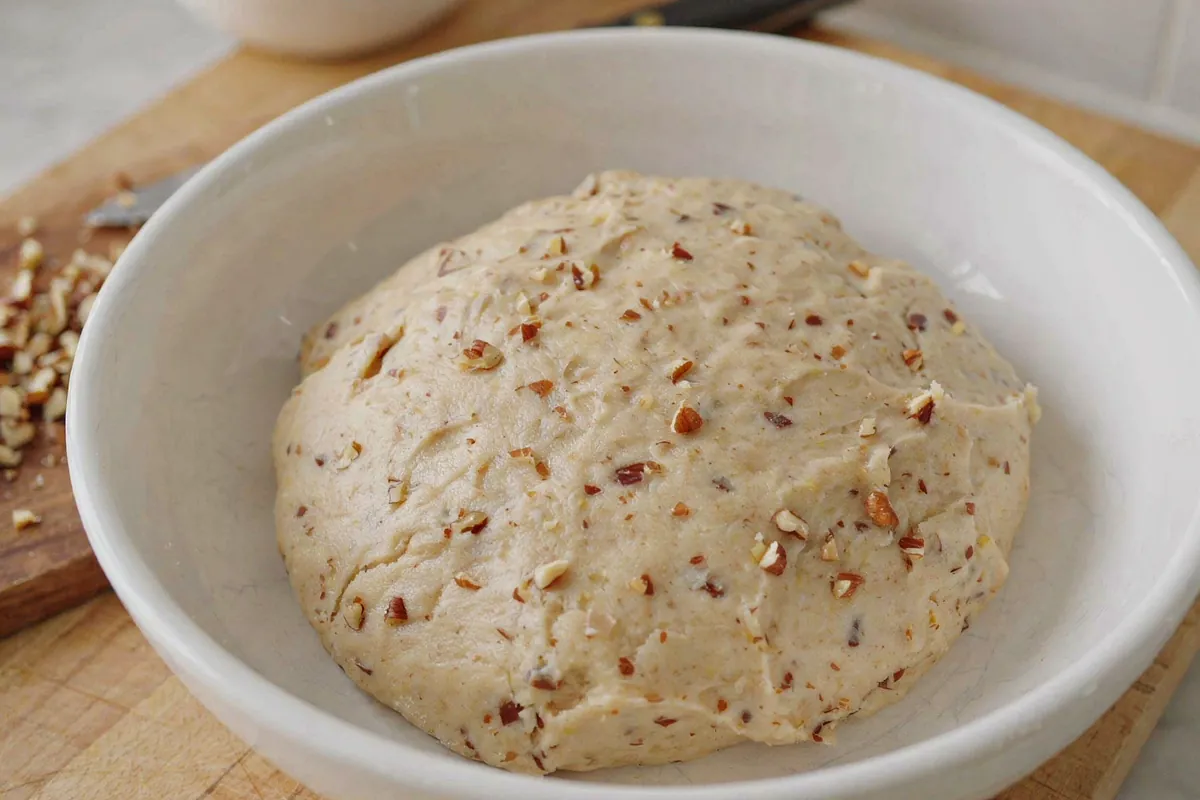
Add the flour and salt and mix on low speed just until the dough comes together. It will look crumbly at first, then clump into a soft dough. Stir in the finely chopped pecans with a spatula.
Squeeze a bit in your hand: it should hold together like soft play dough. If it’s still sandy, mix a few seconds longer.
3Chill, then roll 1-inch balls
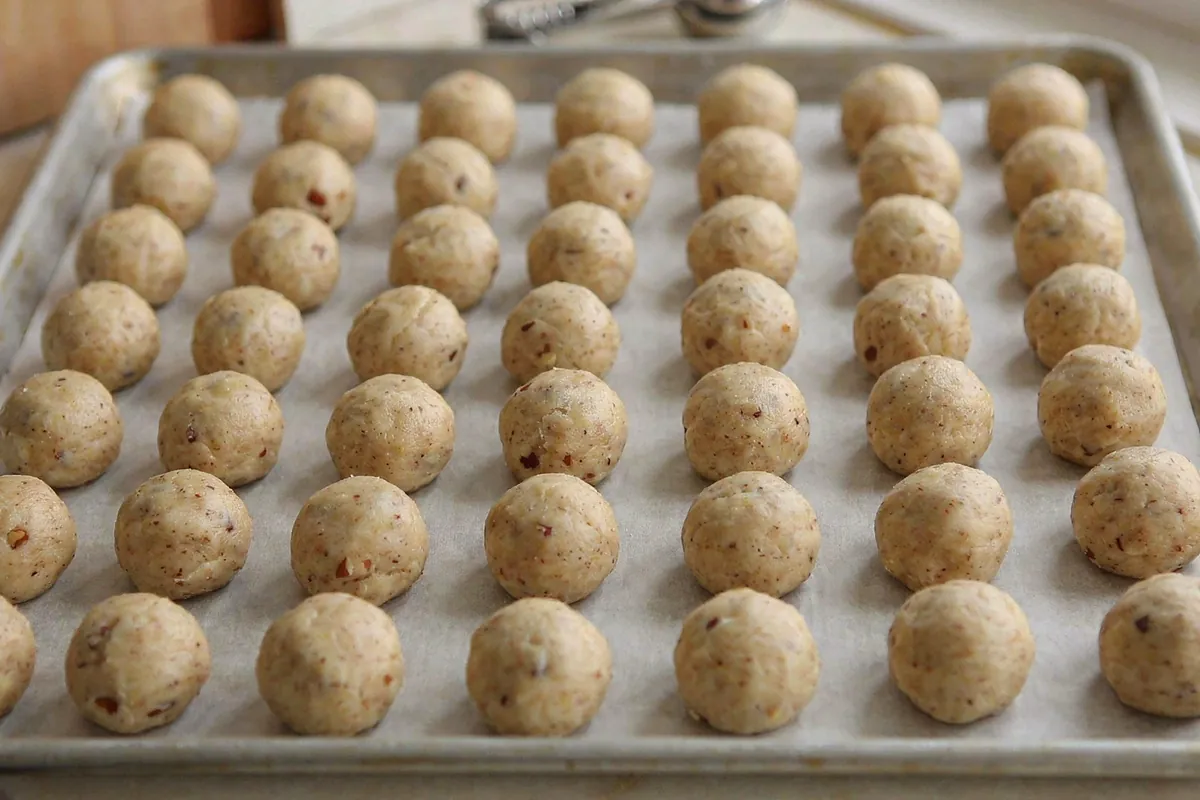
Cover the bowl and refrigerate the dough for 30 minutes. Meanwhile, heat the oven to 350°F with a rack in the center, and line 2 baking sheets with parchment.
Roll the dough into 1-inch balls (a scant tablespoon of dough each) between your palms and set them 1½ inches apart on the sheets. They barely spread, so you can fit about 24 on a sheet.
4Bake until the bottoms are lightly golden
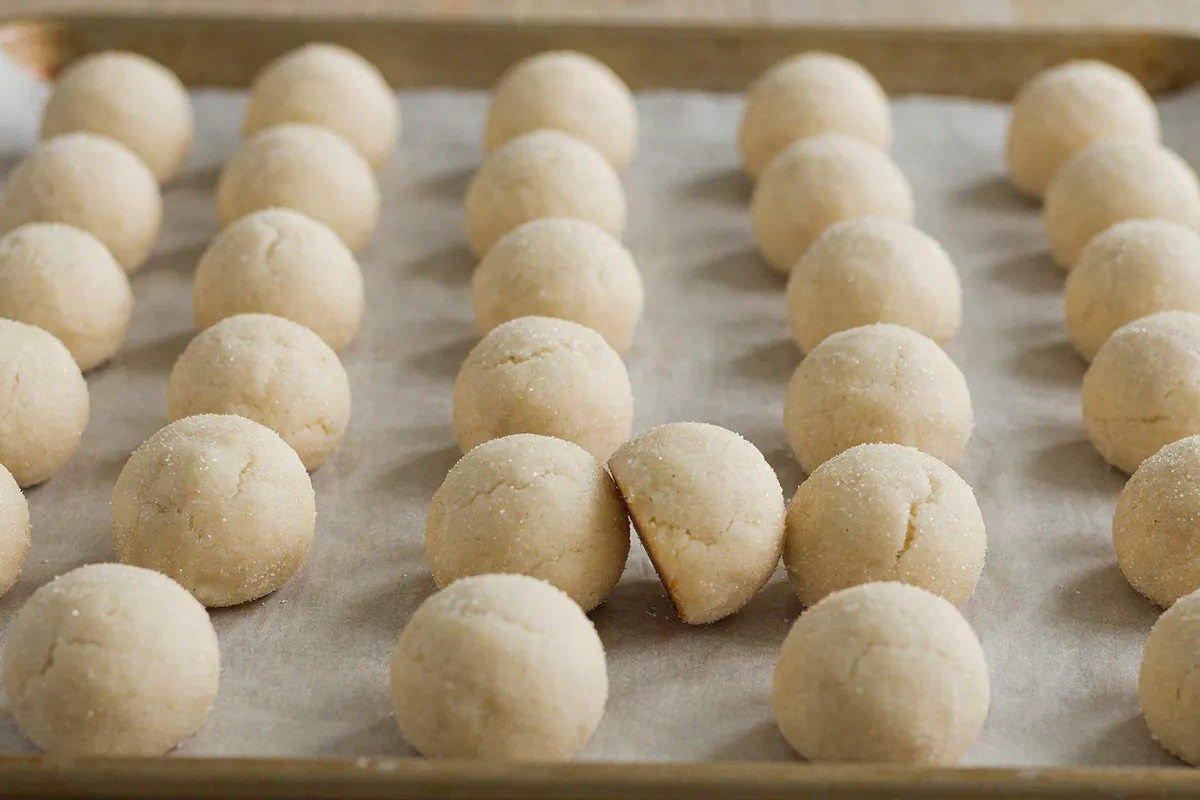
Bake one sheet at a time for 11–13 minutes. Keep the second sheet in the fridge while the first one bakes.
The tops should stay pale, almost the color of the raw dough, with just a hint of gold at the very bottom edge. See the next section for exactly what to look for.
5Rest 5 minutes, then roll while warm
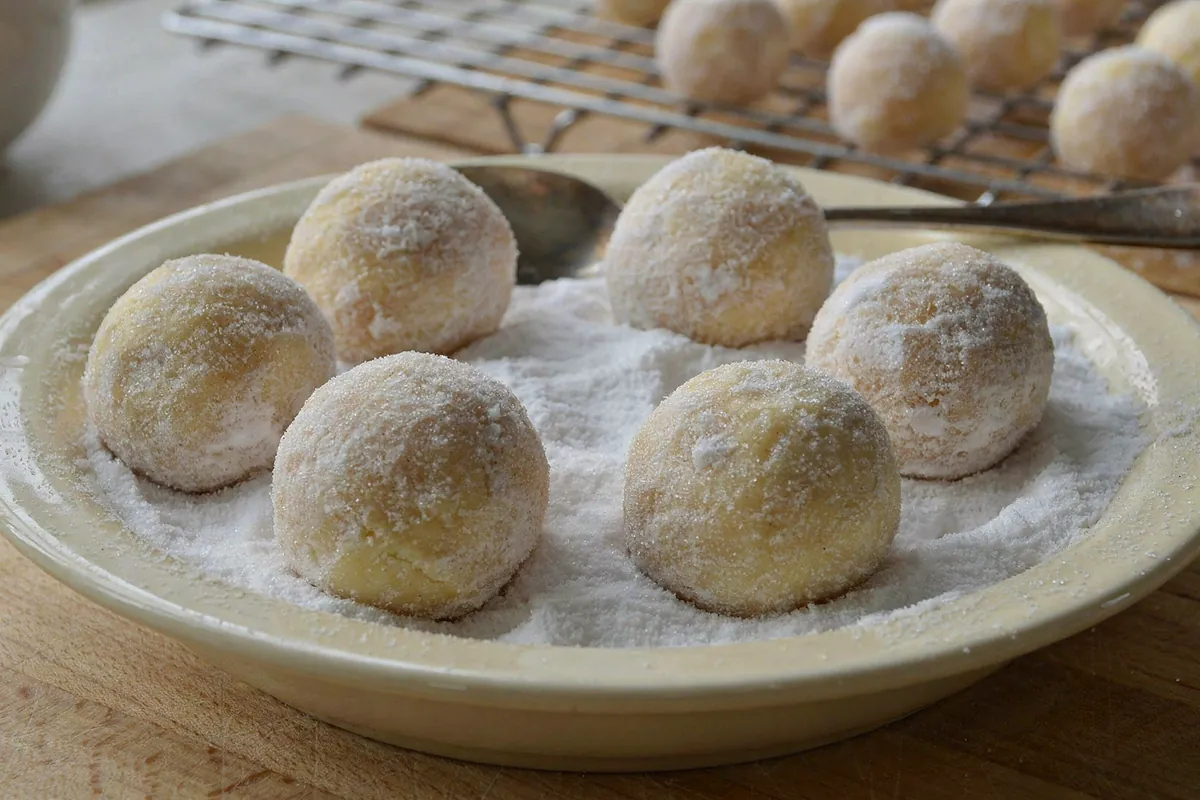
Put the 1½ cups of powdered sugar in a shallow bowl. Let the cookies sit on the baking sheet for 5 minutes: straight out of the oven they’re too tender to pick up.
Roll the warm cookies in the sugar a few at a time, gently, using a spoon or your fingertips, and move them to a wire rack. The first coat will look a little thin and patchy where it melts. That’s exactly what you want.
6Cool completely, then roll again
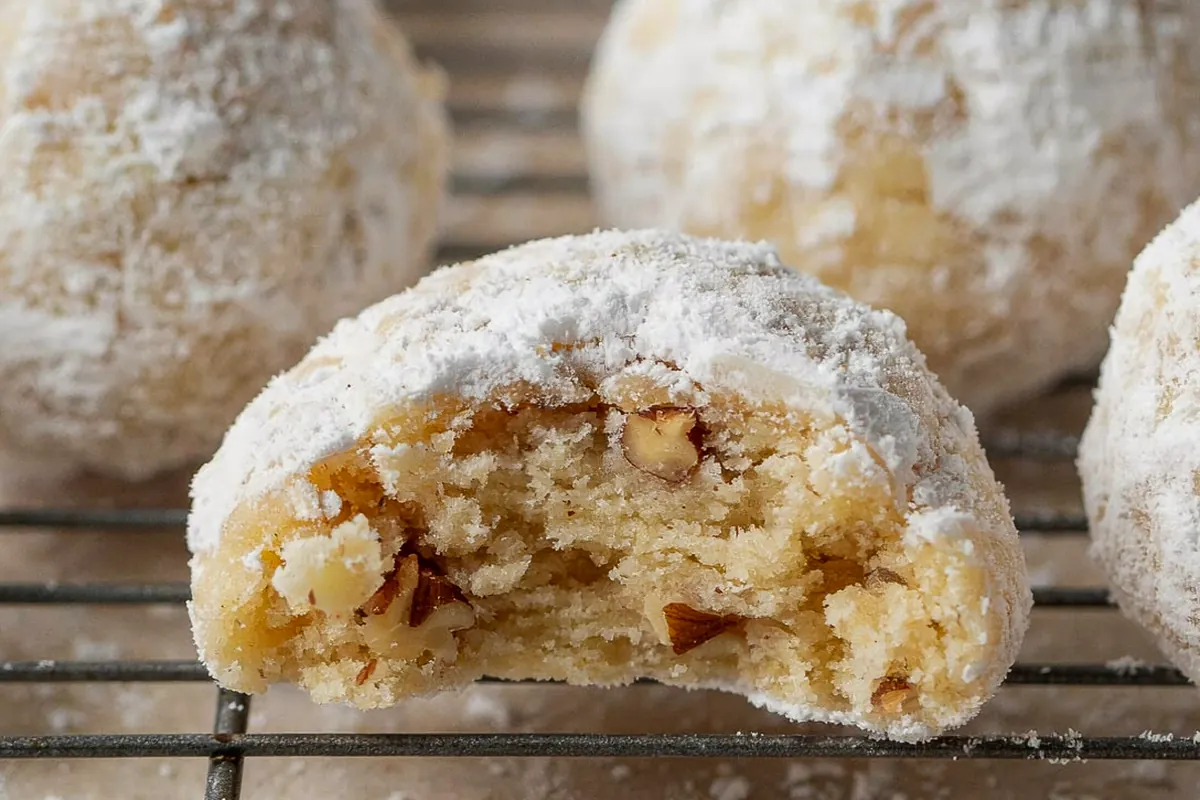
Let the cookies cool completely on the rack, about 30 minutes. Then roll each one in the powdered sugar a second time for a thick, snowy coat that sticks.
If your bowl of sugar has picked up crumbs or damp clumps by now, sift it or use fresh sugar for the second roll so the finish looks clean.
How to know they’re done
- Look underneath: tip one cookie over with a spatula. The bottom should be lightly golden. Pale white means a few more minutes; deep brown means pull the next batch earlier.
- Look on top: pale and matte, no longer shiny or wet, with no browning. A few tiny cracks are fine.
- Touch: the top feels set and dry when tapped lightly. The cookie will still feel soft; it firms up as it cools.
- Timing: start checking at 11 minutes. Ovens vary a lot, and an oven thermometer is the easiest way to know your 350°F really is 350°F.
There’s no reliable internal temperature for small cookies like these, so trust the bottoms. Underbaked snowballs taste pasty and greasy; overbaked ones are dry and fall apart in the sugar.
Snowball Cookies (Russian Tea Cakes)
Buttery pecan shortbread balls with no eggs, baked pale and rolled twice in powdered sugar. Makes about 4 dozen (1-inch) cookies.
Pan: 2 baking sheets lined with parchment
Ingredients
- For rolling
Instructions
- Beat the butter and ½ cup powdered sugar on medium speed about 2 minutes, until smooth and creamy. Beat in the vanilla.
- Add the flour and salt and mix on low just until a soft dough forms. Stir in the chopped pecans.
- Cover and refrigerate the dough for 30 minutes. Heat the oven to 350°F with a rack in the center and line 2 baking sheets with parchment.
- Roll the dough into 1-inch balls (a scant tablespoon each) and place them 1½ inches apart on the sheets.
- Bake one sheet at a time for 11–13 minutes, until the bottoms are lightly golden and the tops are pale and set. Keep the second sheet in the fridge while you wait.
- Let the cookies rest on the sheet 5 minutes. Roll them gently in the 1½ cups powdered sugar and move them to a wire rack.
- Cool completely, about 30 minutes, then roll them in the powdered sugar again.
Walnuts work in place of pecans: ¾ cup (85 g) finely chopped.
Store airtight at room temperature up to 4 days, or freeze up to 2 months. Re-roll in powdered sugar after thawing.
If the dough chills longer than 30 minutes (up to 2 hours) and gets too firm to roll, let it stand a few minutes.

Variations
Walnut snowballs
Use ¾ cup (85 g) finely chopped walnuts instead of pecans. Everything else stays the same. Walnuts taste a little more earthy and slightly bitter, which some people prefer with the sweet coating.
Toasted pecan
Toast the pecans whole, then chop them: chopped pieces toast unevenly. Spread the pecans on a rimmed baking sheet and bake at 350°F, stirring once, until fragrant and a shade darker, about 7–10 minutes. Let them cool completely before chopping and stirring them into the dough, or they’ll soften the butter.
Almond snowballs
Swap the pecans for finely chopped almonds and replace ½ teaspoon of the vanilla with ½ teaspoon almond extract. Almond extract is strong, so a little goes a long way.
Bigger or smaller balls
Smaller balls bake faster, so start checking a couple of minutes early and go by the bottoms, not the clock. Bigger ones crack more easily and need longer, so 1 inch is the sweet spot for a cookie that holds together.
Troubleshooting
| Problem | Likely cause | Fix next time |
|---|---|---|
| Flat bottoms, spread out | Butter too soft or dough not chilled | Chill the dough at least 30 minutes; keep the second sheet cold |
| Broke apart when rolling | Rolled straight from the oven, or overbaked | Rest 5 minutes first; pull them when the tops are still pale |
| Dry, sandy, crumbly | Too much flour or baked too long | Spoon and level the flour (or weigh 270 g); check at 11 minutes |
| Coating melted and looks wet | Only rolled once, while hot | Roll warm, cool completely, then roll again |
| Bumpy, lumpy surface | Nuts chopped too coarsely | Chop to the size of rice grains, or pulse briefly in a food processor |
| Brown tops | Oven running hot or rack too high | Check with an oven thermometer; bake on the center rack |
| Greasy, pasty center | Underbaked | Bake until the bottoms are lightly golden, not white |
Storing and freezing
Keep the cookies in an airtight container at room temperature for up to 4 days. Layer them between sheets of parchment so the coating doesn’t rub off, and keep them away from other cookies: their moisture can make the sugar go soft.
To freeze, let the cookies cool completely (the first coat of sugar is fine), pack them in a freezer bag or container with as little air as possible and freeze up to 2 months. Thaw them at room temperature, then roll them in fresh powdered sugar before serving, since some of it melts into the cookie in the freezer.
For a cookie exchange or tins, give them their second roll on the day you pack them so they look their whitest. Find more holiday ideas in Christmas baking.
Questions
Are snowball cookies, Russian tea cakes and Mexican wedding cookies the same thing?
Very nearly. They share the same butter, powdered sugar, flour and nut dough and the same sugar coat. The names change by family and region more than by recipe, and some versions use almonds or walnuts instead of pecans.
Can I use granulated sugar in the dough?
Stick with powdered sugar. It blends smoothly into the butter and gives the fine, tender, melt-in-your-mouth crumb these cookies are known for, and the classic versions from King Arthur, Taste of Home and Betty Crocker all use it in the dough.
Can I make them without nuts?
You can leave the nuts out and still get a buttery shortbread ball, though the flavor will be plainer. Chill the dough for the full 30 minutes before rolling.
Why did my powdered sugar disappear?
Sugar melts on a warm cookie, and over time the cookie’s surface soaks some of it up. That’s why the second roll happens once they’re cool, and why a quick re-roll before serving brings them back to snowy white.
Can I make the dough ahead?
A little. The dough can chill for 1 to 2 hours instead of 30 minutes, which some classic versions call for. If it gets too firm to roll, let it stand at room temperature for a few minutes. For more lead time, bake the cookies and freeze them (see storing and freezing above).