
The short version: The short version: 2¾ cups flour, 1 cup butter, 1 cup sugar, 1 egg and only ½ teaspoon of baking powder, rolled ¼ inch thick between two sheets of parchment, chilled, cut, then frozen for 15 minutes before baking at 350°F. Cold dough and a small amount of leavening are what keep the stars pointy. Bake 10–12 minutes, just until the cookies look set and the edges are barely golden.
Why this sugar cookie recipe holds its shape
A cut-out cookie has one job a drop cookie doesn’t: it has to come out of the oven looking like the cutter that made it. Stars should keep five points, trees should keep their branches, and a gingerbread-man-shaped sugar cookie shouldn’t puff into a blob. Three things in this formula make that happen.
- Very little leavening. Many sugar cookie recipes use a full teaspoon of baking powder. This dough uses half that, so the cookies stay soft inside without spreading. King Arthur’s bakers point out that unleavened dough holds its shape best of all; a half teaspoon is the compromise between a soft bite and a crisp outline.
- Rolled soft, chilled flat. You roll the soft dough right after mixing, between sheets of parchment, and chill the flat sheets. Soft dough rolls easily, no extra flour sneaks in, and a thin sheet gets cold much faster than a thick disk.
- A second, short chill. Cut shapes go into the freezer for 15 minutes. Cold butter takes longer to melt in the oven, so the edges set before they can slump.
The flavor stays classic: butter, vanilla, a little salt. It’s a sturdy cookie that’s still tender, thick enough at ¼ inch to handle royal icing and survive a cookie tin, and plain enough to let the decorating shine.
The ingredients (and what each one does)
| Ingredient | What it does |
|---|---|
| All-purpose flour, 2¾ cups (330 g) | The structure. Spoon it into the cup and level it; a scooped cup can hold far more and gives dry, crumbly dough that cracks when you roll it. |
| Unsalted butter, 1 cup (227 g), softened | Flavor and tenderness. Soft enough to dent with a finger, still cool and not shiny. Melty butter means spread. |
| Granulated sugar, 1 cup (198 g) | Sweetness and a crisp edge. It also helps the cookie brown lightly at the rims. |
| Large egg, 1 | Binds the dough so it rolls without cracking and gives a softer bite than a butter-only shortbread. |
| Baking powder, ½ tsp | Just enough lift for a tender middle. Doubling it is the most common reason cut-outs lose their shape. |
| Vanilla + salt | Salt keeps the cookie from tasting flat; vanilla is the classic sugar cookie flavor. A little almond extract is a popular extra. |
A kitchen scale makes this dough much more reliable: 330 g of flour is 330 g every time, while cups can vary by 20 g or more depending on how you fill them.
3 rules for cut-out cookies with sharp edges
- Cream briefly, not forever. Beat the butter and sugar for about 2 minutes, until creamy and a shade lighter. Cakes want lots of air whipped in; cut-out cookies don’t, because trapped air expands in the oven and pushes the edges out.
- Roll between parchment, never on a floured counter. Every pinch of flour you dust on the counter ends up in the dough. Parchment needs none, the dough doesn’t stick, and your cookies stay tender.
- Everything goes in cold. Chill the rolled sheets at least 1 hour, cut while firm, then freeze the cut shapes for 15 minutes. Rerolled scraps get the same treatment. Warm dough is the main cause of puffy, rounded edges.
Step by step
1Mix the dough
Whisk the flour, baking powder and salt in a bowl. In a large bowl, beat the softened butter and sugar on medium speed for about 2 minutes, until smooth, creamy and slightly paler. Scrape the bowl.
Beat in the egg and vanilla (plus almond extract, if using) until combined. With the mixer on low, add the flour mixture in two parts and stop as soon as no dry flour shows. The dough will be soft and thick, a little like play dough.
2Roll between parchment
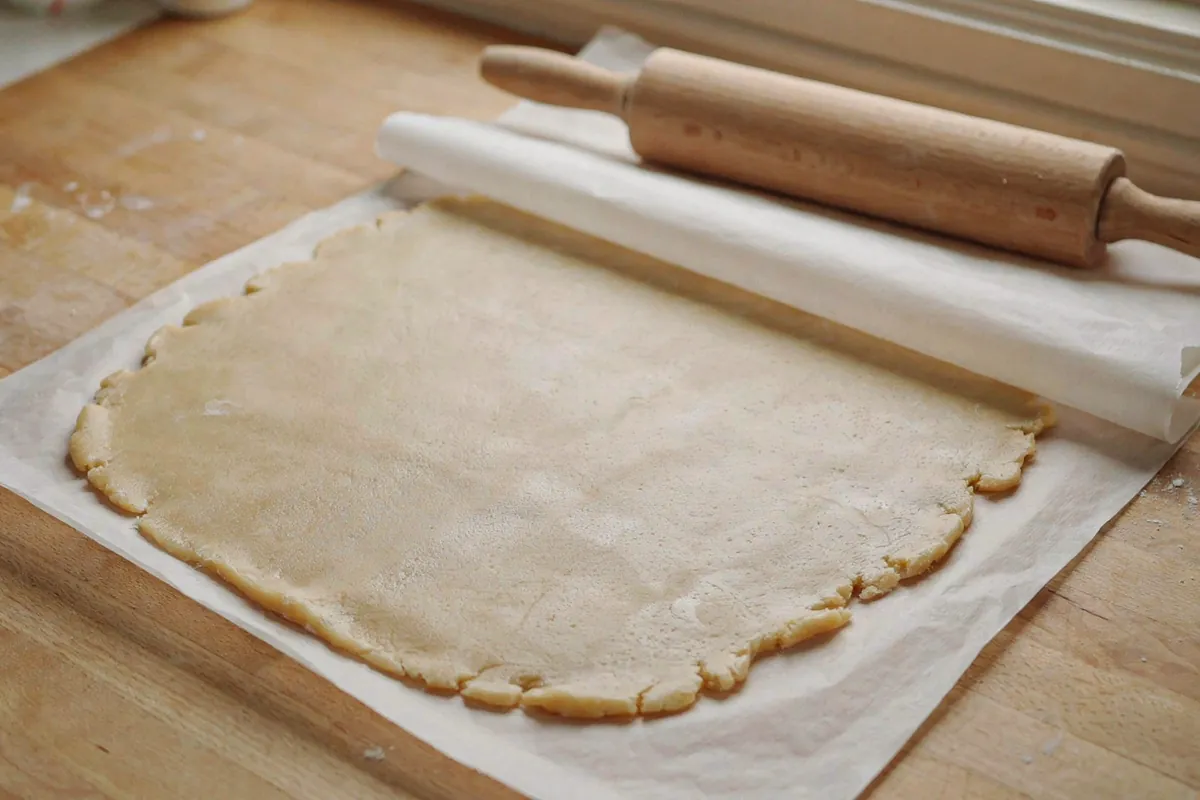
Divide the dough in half. Put one half between two large sheets of parchment and roll it into an even sheet ¼ inch thick. Peel the top sheet off now and then and lay it back down, so it doesn’t crease into the dough. Repeat with the second half.
Thin cookies are fine too (about ⅛ inch), but they bake faster and break more easily. ¼ inch is the sturdy, soft cookie most people picture.
3Chill, cut and freeze
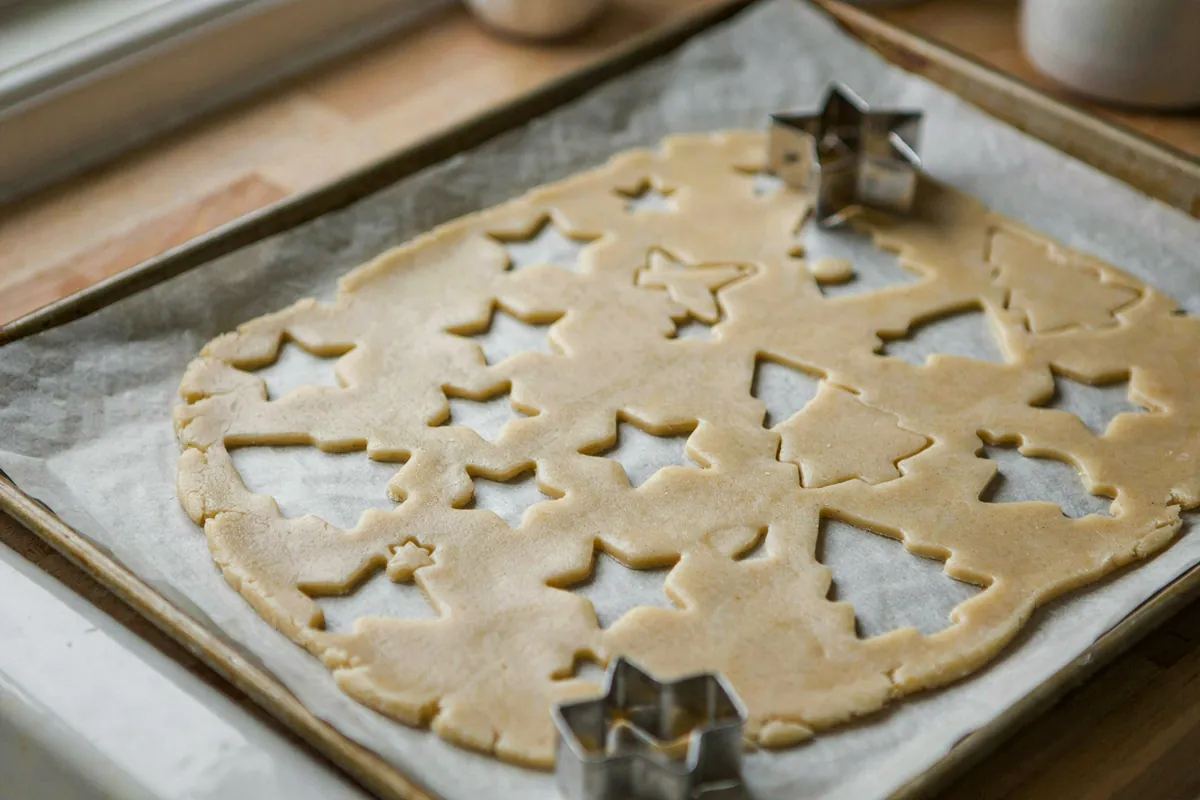
Stack both sheets, still in their parchment, on a baking sheet and refrigerate for at least 1 hour, until firm. You can leave them overnight.
Heat the oven to 350°F with a rack in the center and line two baking sheets with parchment. Peel the top parchment off one dough sheet, cut shapes (dip the cutter in a little flour only if it sticks) and move them to the lined sheets about 1 inch apart. Press the scraps together, reroll between parchment and chill again before cutting.
Put the sheet of cut cookies in the freezer for 15 minutes while the oven finishes heating.
4Bake one sheet at a time
Bake one sheet at a time for 10–12 minutes, until the tops look dry and set and the very edges are barely golden. Smaller cutters may be ready at 8 minutes; start checking early the first time.
Don’t wait for the cookies to brown all over. By then they are crisp through, which is lovely with tea but not the soft cut-out this recipe is after.
5Cool, then decorate
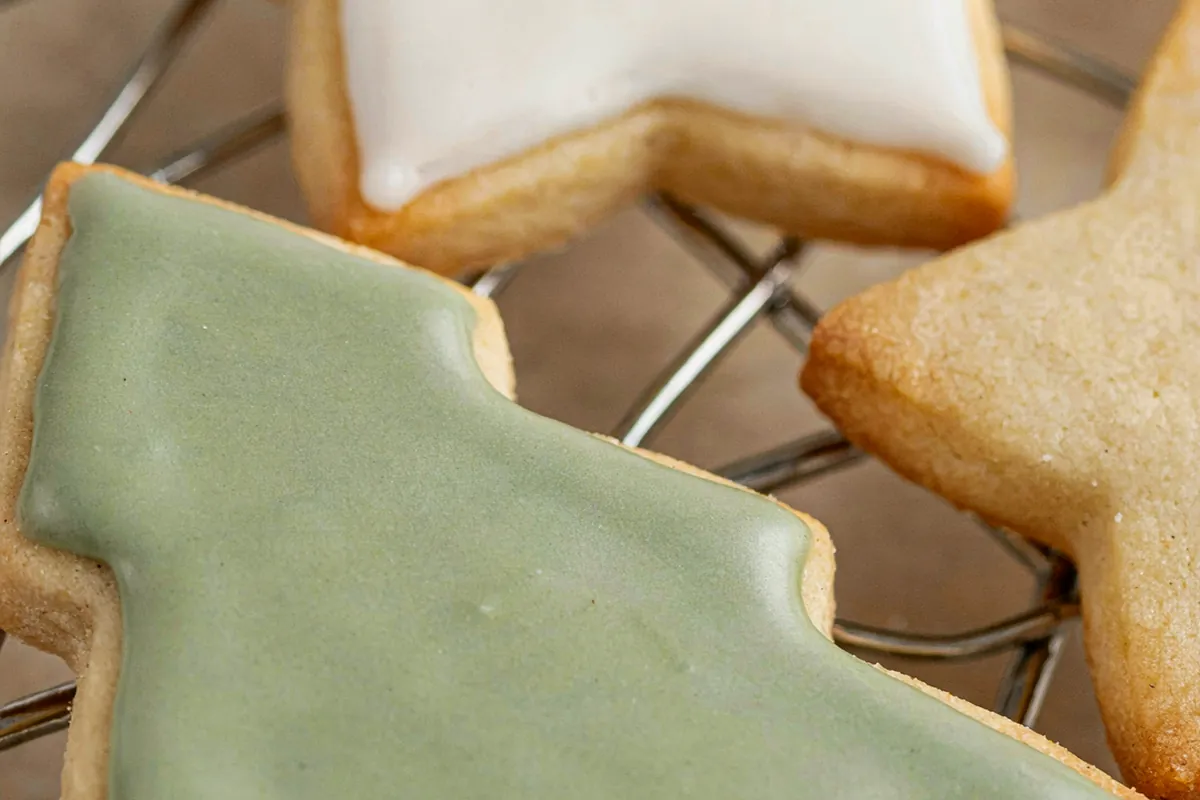
The cookies are soft and bend easily when hot, so let them firm up on the baking sheet for at least 5 to 10 minutes before moving them to a rack (or simply let them cool completely on the sheet). Cool them all the way before icing; warm cookies melt icing.
For royal icing, beat the powdered sugar, meringue powder and warm water until thick and glossy with stiff peaks: about 7–10 minutes on low speed in a stand mixer, or 10–12 minutes on high with a hand mixer. Tint portions with a few drops of gel food coloring if you like. Use it thick to pipe outlines. To flood the middle, thin a portion with water, ½ teaspoon at a time, until a ribbon dropped back into the bowl disappears in about 10 seconds. The surface sets within a few hours, but give iced cookies 8 hours or overnight to dry completely before stacking.
How to know they’re done
- Look: the tops have lost their raw shine and look matte and dry, and the thinnest edges (star points, tree tips) are barely golden. The centers stay pale.
- Touch: a light press near the edge leaves almost no mark. The middle will still feel soft; it firms up as the cookie cools on the sheet.
- Thermometer: cookies are too thin to probe, so check the oven instead. Many ovens run hotter or cooler than the dial says; an oven thermometer reading 350°F makes the 10–12 minute timing far more reliable.
Classic Cut-Out Sugar Cookies
Soft, buttery cut-out cookies with sharp edges, rolled between parchment and chilled, with optional meringue powder royal icing. Makes 24 to 36 (3-inch) cookies, depending on the cutters.
Pan: 2 baking sheets lined with parchment, plus extra parchment for rolling
Ingredients
- Cookies
- Royal icing (optional)
Instructions
- Whisk the flour, baking powder and salt in a bowl.
- Beat the butter and sugar on medium speed for about 2 minutes, until creamy and slightly paler. Beat in the egg, vanilla and almond extract, if using.
- On low speed, add the flour mixture in two parts and mix just until no dry flour shows.
- Divide the dough in half. Roll each half between two sheets of parchment to an even ¼ inch thick.
- Stack the sheets on a baking sheet and refrigerate at least 1 hour, until firm (or overnight).
- Heat the oven to 350°F with a rack in the center. Line 2 baking sheets with parchment.
- Peel off the top parchment, cut shapes and place them 1 inch apart on the lined sheets. Reroll scraps between parchment and chill again before cutting.
- Freeze the cut cookies on the baking sheet for 15 minutes.
- Bake one sheet at a time for 10–12 minutes, until the tops look set and dry and the edges are barely golden.
- Let the cookies firm up on the baking sheet for 5 to 10 minutes, then move them to a rack (or leave them on the sheet) and cool completely before icing.
- For the icing, beat the powdered sugar, meringue powder and warm water until glossy with stiff peaks: 7–10 minutes on low in a stand mixer or 10–12 minutes on high with a hand mixer. Tint with gel food coloring if you like. Pipe outlines with thick icing; thin some with water, ½ tsp at a time, to flood. Let the icing dry 8 hours or overnight before stacking.
Make ahead: freeze baked, undecorated cookies in an airtight container for up to 3 months; thaw covered for 1–2 hours.
Keep royal icing covered with a damp towel or plastic wrap while you work; it crusts quickly in open air.
Use meringue powder, not raw egg whites, for icing that’s safe for everyone.

Variations
Simple powdered sugar glaze (no meringue powder)
Stir 2¼ cups (254 g) powdered sugar with 2 tablespoons light corn syrup and 2½ to 3 tablespoons milk until smooth and thick enough to spread. Spread it over cooled cookies with a small spatula or the back of a spoon and add sprinkles while wet. It dries softer than royal icing and with less shine, so give it several hours before stacking.
Almond or citrus
Add ½ teaspoon almond extract with the vanilla for the bakery-style flavor, or rub the finely grated zest of 1 lemon or orange into the sugar before creaming.
Sparkling sugar edges
Skip the icing: sprinkle the cut shapes with coarse sparkling sugar right before they go into the freezer. It stays crunchy and catches the light on a cookie tray.
Thin and crisp
Roll the dough ⅛ inch thick and use smaller cutters. Start checking at 7 minutes and take them out when the edges are just golden.
Troubleshooting
| Problem | Likely cause | Fix next time |
|---|---|---|
| Cookies spread and lost their points | Dough too warm, butter too soft, or extra baking powder | Freeze the cut shapes 15 minutes, use butter that’s soft but still cool, keep the baking powder at ½ tsp. |
| Dough cracks when rolling | Too much flour (scooped cups) or dough chilled rock-hard | Weigh the flour. Let very cold dough sit 5–10 minutes before rolling or cutting. |
| Cookies puffed and look domed | Too much air beaten in, or extra baking powder | Beat the butter and sugar just until creamy (about 2 minutes) and keep the baking powder at ½ tsp. Flatter tops are easier to ice. |
| Tough, dry cookies | Flour added while rolling, or overbaked | Roll between parchment with no dusting flour; pull them when the edges are barely golden. |
| Edges brown before centers set | Oven runs hot or sheet too close to the bottom | Check the oven with a thermometer, bake on the center rack, use a light-colored sheet. |
| Royal icing too runny or won’t dry | Too much water, or grease in the bowl | Add powdered sugar a spoonful at a time; use a clean, grease-free bowl and beater. |
Storing and freezing
Dough: the rolled sheets keep in the refrigerator, tightly wrapped in their parchment, overnight. For longer, freeze the flat sheets wrapped well and thaw in the refrigerator before cutting.
Baked cookies: plain cookies keep in an airtight container at room temperature for several days. Once royal icing is completely dry and hard (overnight), iced cookies can be stacked between sheets of parchment or waxed paper.
Freezing: freeze baked, undecorated cookies in layers separated by waxed paper in an airtight container for up to 3 months. Thaw them, still covered, at room temperature for 1–2 hours before decorating, so condensation forms on the container and not on the cookies.
Questions
Do I have to chill sugar cookie dough?
Yes, for cut-outs. Chilling firms the butter so the cookies hold sharp edges; skip it and stars turn into round blobs. Rolling first and chilling the flat sheets makes the wait as short as possible.
Why roll the dough between parchment paper?
It means no extra flour gets worked into the dough, so the cookies stay tender, and the dough never sticks to the counter or rolling pin. The parchment also makes it easy to move the sheets to the refrigerator.
Is royal icing safe to eat?
This version uses meringue powder, which is made with pasteurized dried egg whites, instead of raw egg whites. That’s why it’s the usual choice for royal icing on cookies you plan to share.
How thick should cut-out sugar cookies be?
A quarter inch gives a soft, sturdy cookie that holds icing well and doesn’t snap. An eighth of an inch gives a thinner, crisper cookie that bakes in less time.
Can I make Christmas sugar cookies ahead?
Yes. Freeze the baked, undecorated cookies for up to 3 months, or keep the rolled dough sheets in the refrigerator overnight. Decorate a day or two before you need them so the icing has time to dry.